

Super User
Installations
Installations
We install what we sell…
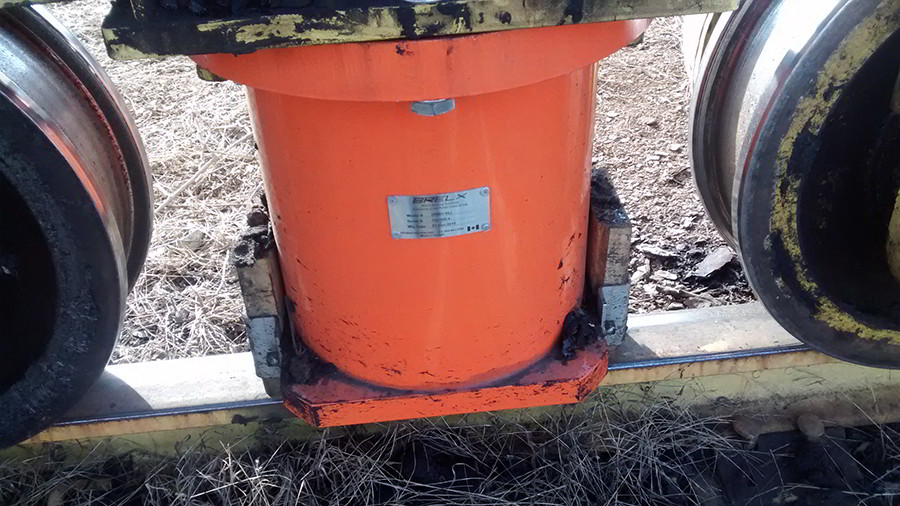
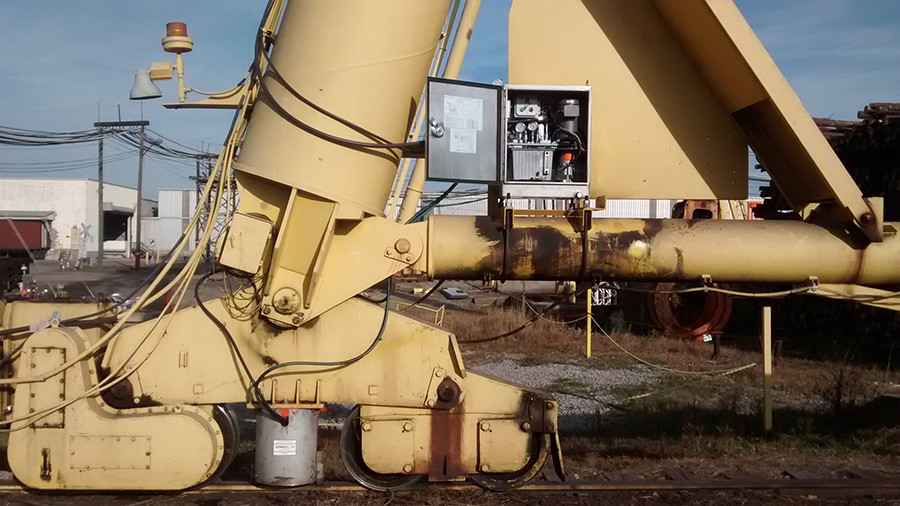
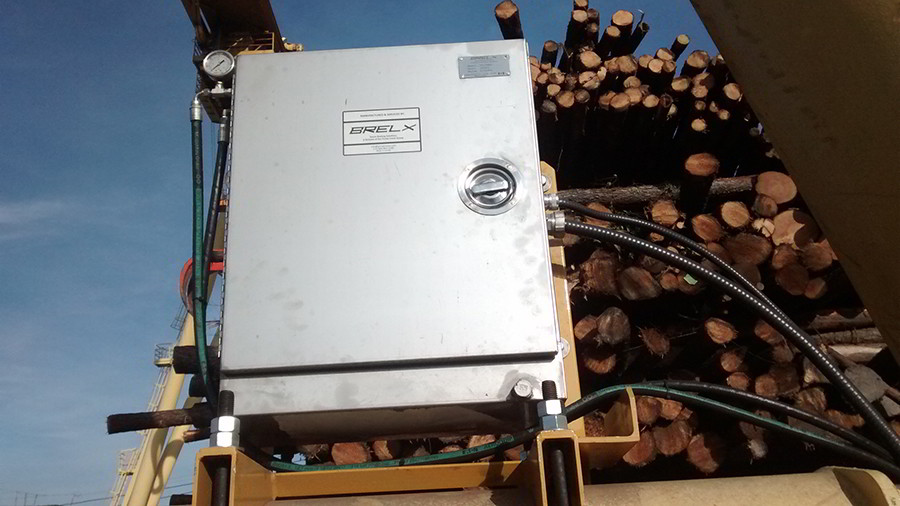
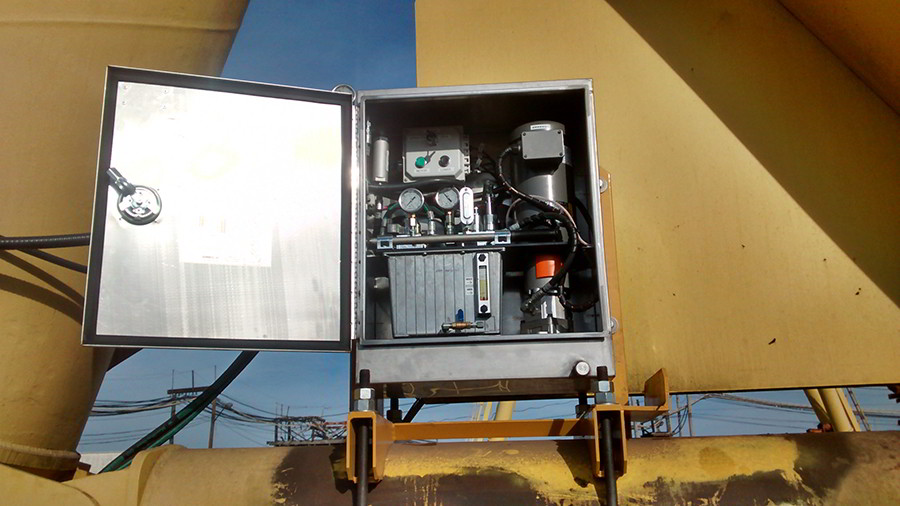
BRELX is not only able to supply you with the most innovative and reliable storm brakes in the industry, we also install them for you. Whether it's installing an entire new system or replacing existing braking units, our fully-qualified technicians are there to get the job done right. Please contact our sales department today for all your installation requirements and questions.


Inspections & Testing
Electronic Reporting Now Available
BRELX now offers electronic reporting, this will make getting your inspection results quicker and easier to view, call us for more information!
Inspections & Testing
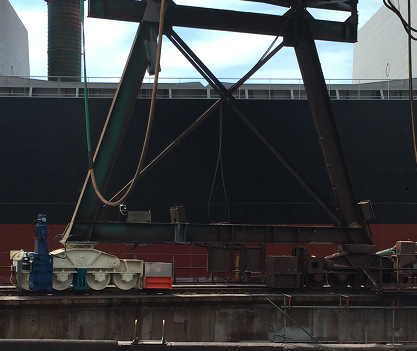
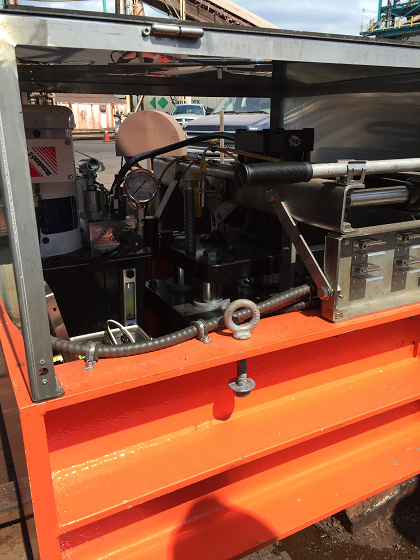
Our team of service technicians and engineers provide expertise that covers the wide range of rail mounted material handling equipment. We are fully qualified to perform preventive maintenance inspections on a variety of container and bulk material handling cranes, associated equipment and services. We offer full condition reports for all storm braking systems, high speed service brakes, low speed emergency brakes and cable and hose reeling systems, both locally and internationally. Our mission is to support you and keep your equipment well maintained, and safe for operation.
Our expertise in the design of storm braking systems and our experience in servicing them allows us to offer on-site performance tests for rail brakes and rail clamps.
For more details or special requests please contact us.

Rail Clamps - Retractable
RETRACTABLE RAIL CLAMPS


(RRC - Spring Set, Electric Release Rail Clamp) (RRC - Spring Set, Hydraulically Release Rail Clamp)
Introducing a Safer and Better Way for Rail Clamps to Work.
Are your rail clamps still travelling down at rail level, sitting on guide rollers or fixed guides that are constantly wearing, resulting in shoe damage and impact damage to the brake?
RRC releases and retracts the mechanism completely above the rail head; no mechanical guiding means at rail level. Designed for modern high speeds cranes.
RRC Retractable Rail Clamps are designed to clamp on both sides of a rail.
They are spring set and hydraulically OR electrically released rail clamps.
CURRENT HOLDING CAPACITIES AVAILABLE – from 50 kN to 1200 kN
Applications:
• Ship to shore cranes.
• Automated stacking cranes.
• Wide Span Cranes.
• Ship loaders.
• Rail-mounted material handling equipment.
Gallery


- Free your installation now and increase reliability and safety while lowering maintenance costs!
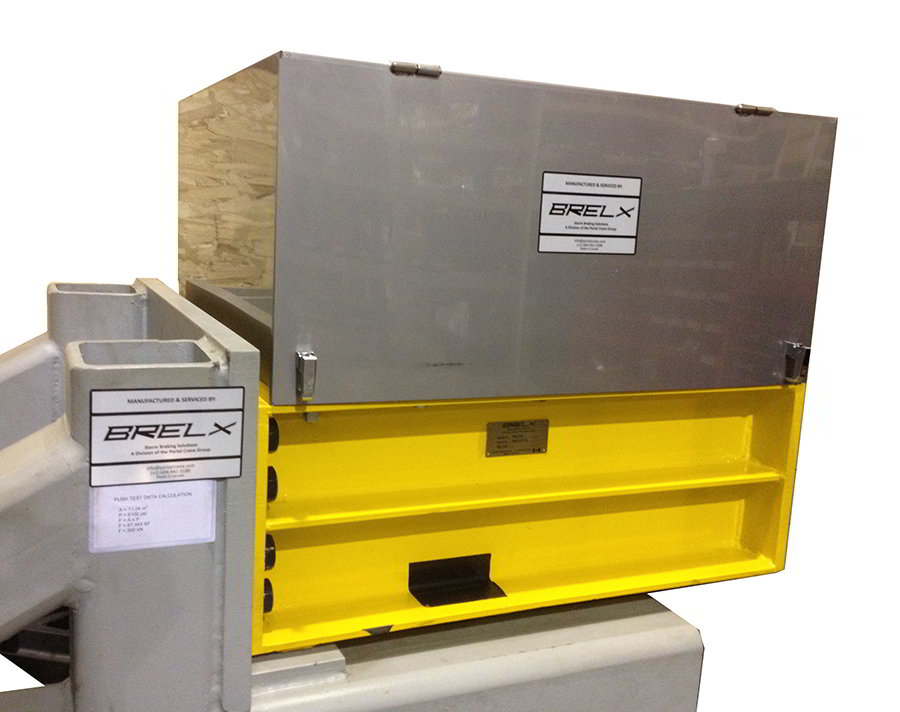
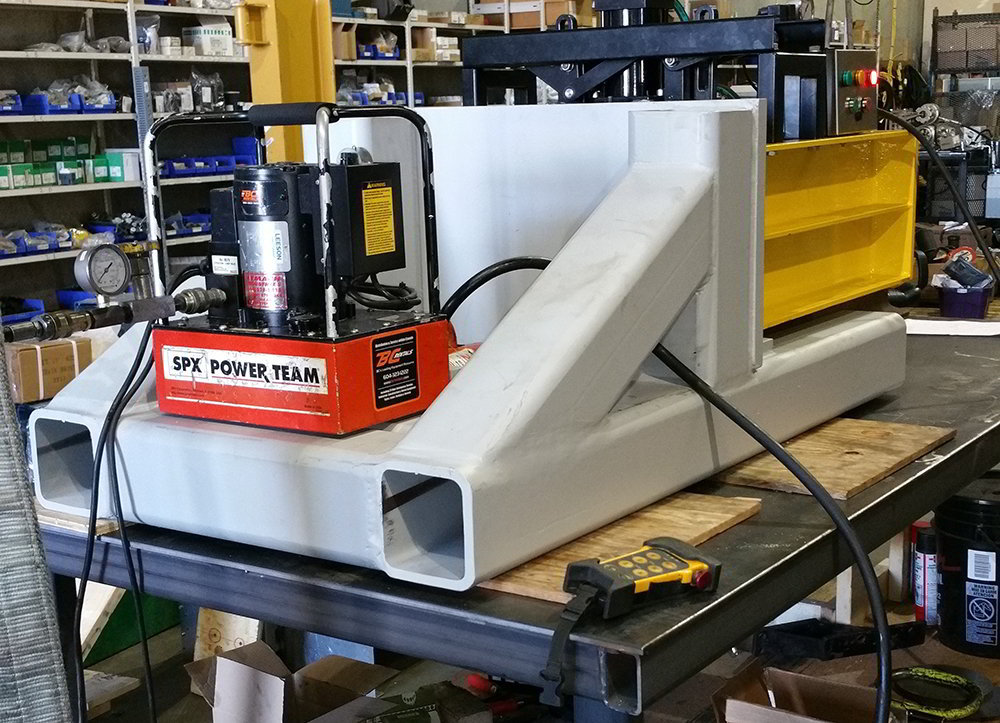
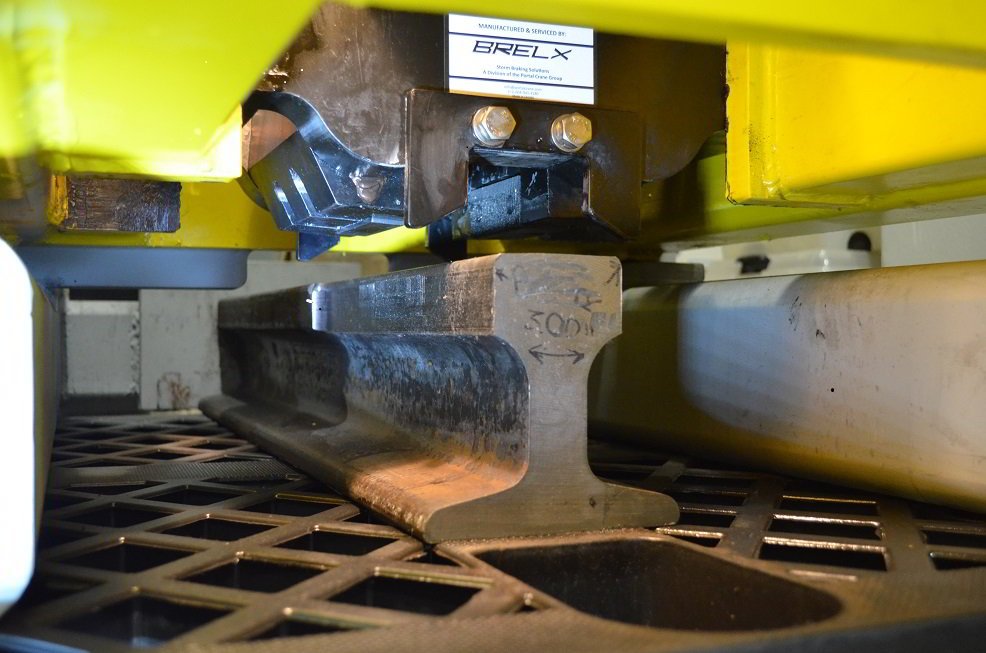
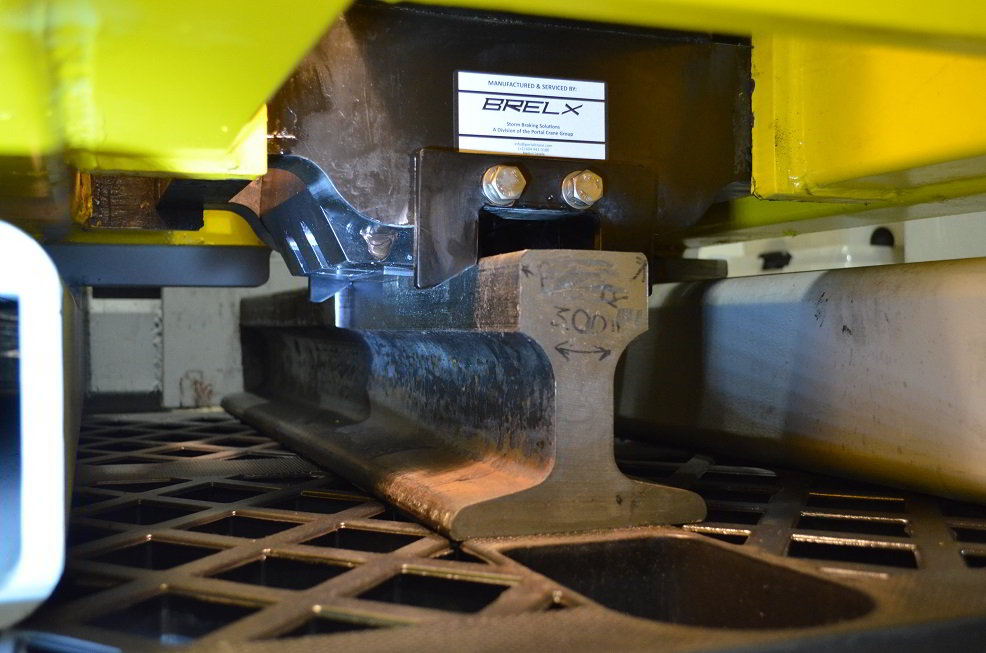
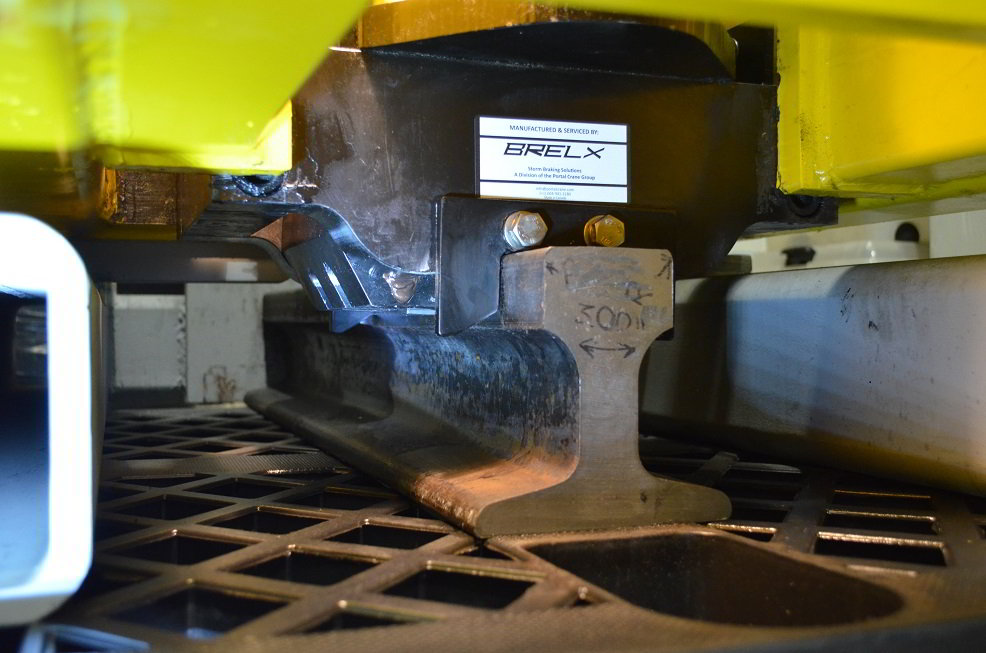
- Now there's a simple single cylinder solution that lifts all the critical components completely free of the rail for machine travel. Shoes and levers are tucked up out of the way inside a rugged enclosure.
- Brelx rail clamps eliminate all hardened guide means and rollers and yet still allow +/-30 mm horizontal and +/-25 vertical rail deviation or float (more is available upon request).
BRELX Rail Clamps are innovatively designed to release and retract completely from the rail head and there are no mechanical guiding means at rail level. There is no wear and tear to guide means, brake shoes as well as rail head itself. Also the effect of the vibrations on the rail clamp mechanism during crane travel is minimized.
When in set position, they provide a designed holding force (capacity) with a patent pending spring force change compensating feature.
CURRENT HOLDING CAPACITIES AVAILABLE – from 50 kN to 1200 kN
OPERATIONAL DESCRIPTION
The solenoid valve SV1 is normally open when de-energized to allow setting of the rail clamp when control power is lost. The hydraulic oil can flow from the cylinder to tank under spring pressure. To release the rail clamp, the solenoid valve is energized allowing the hydraulic pump flow to be blocked to the tank and sent to the hydraulic cylinder, thus compressing the rail clamp springs, opening the clamp jaws and retracting the rail clamp.
MOST IMPORTANT FEATURES
- Rail Clamp jaws retract completely above the rail head when in a released position.
- There are no mechanical guiding means at rail level at any speed.
- No lubrication points required… ever
- Rail clamp shoes protected during crane traversing
- Clamp mechanism parks in a central position when fully retracted and locates on rail head when lowering or setting
- Vertical guiding fork is custom machined in accordance to a rail head profile for precise shoe / rail head engagement
- Controlled setting time by a flow control valve (adjustable from 2 to 30 sec).
- Provisions to allow caging of rail clamps in open position (released)
- Mechanism compensates spring force change – patent pending
- A single ram-type cylinder to carry out spring release compression, shoe retraction and mechanism lifting.
- The ram cylinder is top mounted with no rod connections and can be easily removed for maintenance or replacement in minutes, by undoing four bolts.
- Clamp release, positioning on the rail for proper shoe to rail engagement and reserve stroke monitored by proximity switches.
- Modular design for clamping mechanism to be under same enclosure with the power unit.
- Stainless Steel removable cover comes with the inspection doors located on both sides of a rail clamp.
BENEFITS
Rail Clamp jaws fully released and retracted above the rail means that there are no mechanical guiding means at rail level at any speed which is a paramount for high speed, modern cranes.
Serrated shoes are fully protected from hitting the sides of the rails - contributes to less wear and tear.
A mechanism is compensating for a potential spring force loss due to rail width variation, shoe wear or mechanism out of adjustment.
Rail Clamps - Guided


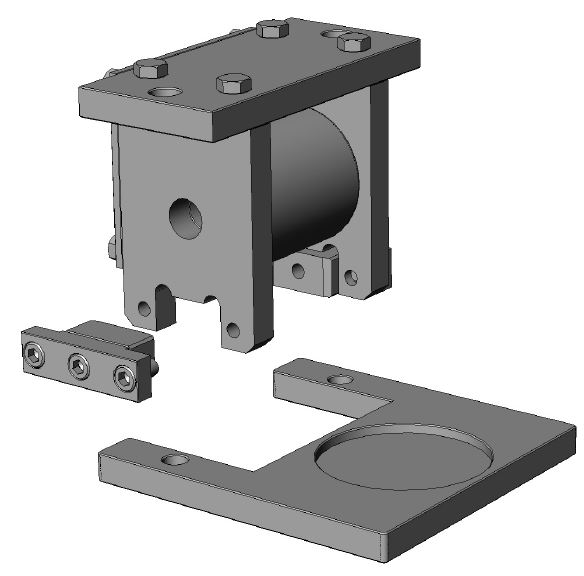
GRC Rides on the rail on two hardened flangeless cylindrical rollers, guided by hardened steel guides. Capable to accommodate rail with large vertical fluctuations.
GRC Guided Rail Clamps are designed to clamp on both sides of a rail.
They are spring set and hydraulically OR electrically released.
Applications:
• Ship to shore cranes
• Automated stacking cranes
• Wide Span Cranes• Shiploaders
• Stacker Reclaimers
• Tripper Cars

Rail Brakes - Self Adjusting
SELF ADJUSTING RAIL BRAKES


Introducing a Safer and Better Way for Rail Brakes to Work
Are your Rail Brakes producing the correct force on the rail? Be sure with our self adjusting rail brakes.
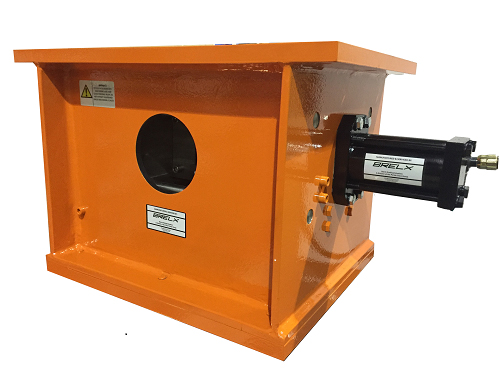
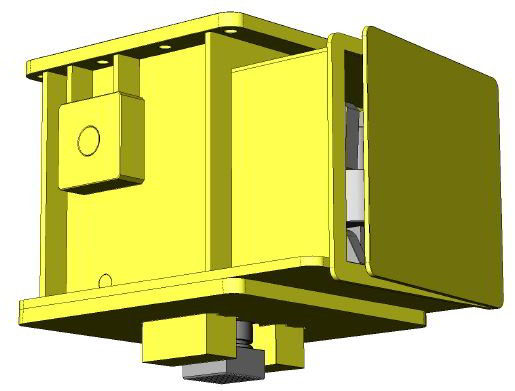
BRELX new RB-SA Series of Self Adjusting Rail Brakes were developed specifically to address problems with crane rail vertical fluctuations. Rail height fluctuations are typically caused over time by settling and fatigue failures of the rail support foundations. Rail height fluctuation has been a big problem for traditional rail brakes. It has either caused the rail brake to impact the rail brake (high rail), causing damage to the rail brake, crane and rail; or it has resulted in such large gaps between the rail brake and the rail (low rail) that the brake no longer produces adequate force or capacity.
Our new rail brake solves this problem by permitting a large rail deviation while providing uniform capacity over the full range of movement. Conventional spring set rail brake spring life is also shortened significantly by increased rail brake stroke. That is why their operating range is typically limited.
It is very important to note that BRELX new rail brake, unlike thruster rail brakes or wheel chocks, is completely spring set HYDRAULICALLY OR ELECTRICALLY released. That means that the forces applied to the rail are supplied, full force, by the springs. This is NOT a self-actuating device, so the crane can be moved at any time in any direction without jockeying the crane to gain release.
Static models available:
- SRB-150-SA capacity 150 kN
- SRB-220-SA capacity 220 kN
Dynamic models available:
- DRB-120 capacity 120 kN
- DRB-180 capacity 180 kN
RB-E-SA Rail Brake-Self Adjusting Spring Set, ELECTRIC Release Rail Brakes available.
Some of the notable features of the new Model RB-SA Series of Self Adjusting Rail Brakes are as follows:
- Hydraulically or Electrically released
- Compensates for up to 38 mm rail deviations with full rated capacity.
- All components, including the hydraulic release cylinder are fully enclosed in a sealed housing, out of the elements.
- All hydraulic components including the cylinder are fully serviceable without removing the rail brake. Simply remove a cover and remove/replace.
- NO RELEASE SHIMS: The rail brake can be emergency released by three methods: Hydraulic hand pump in the HPU, by load removal screws and shoe removal, or by Enerpac and screws. Load removal screws can also be used for caging.
- Compact design fits most existing locations, even those with drop pins. Low height allows retrofitting with adapter flanges.
- Proximity switch for release indication.
- Brake shoes easily removed and replaced.
- Consistent spring stroke for longer spring life.
Gallery
Rail Brake - Classic
RAIL BRAKES - CLASSIC


Our Classic Rail Brakes
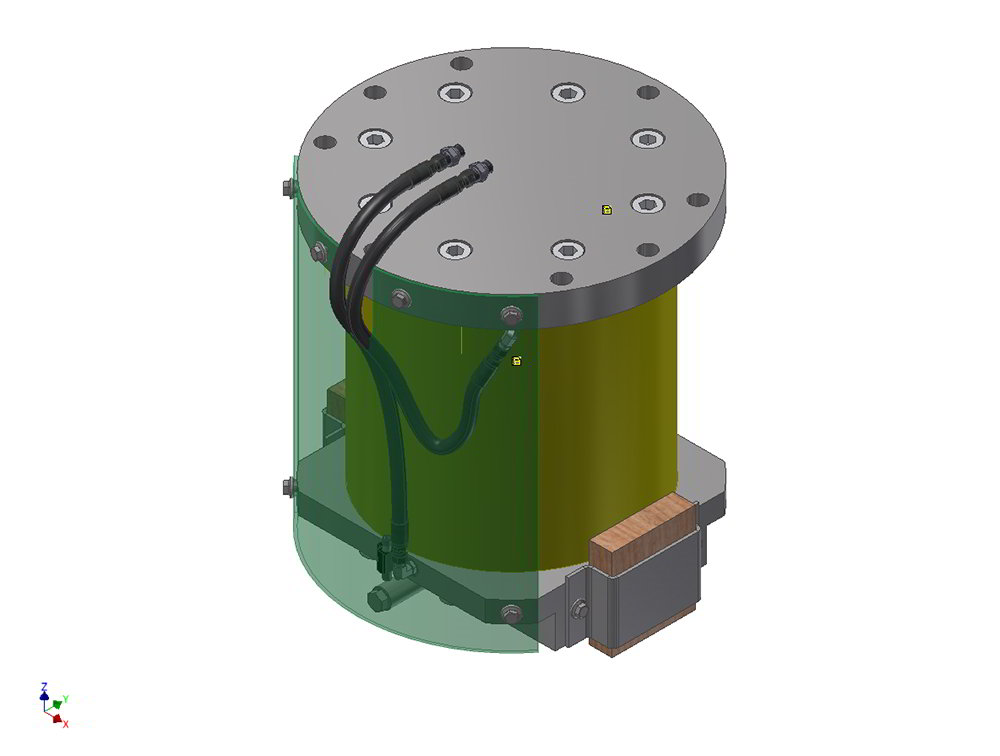
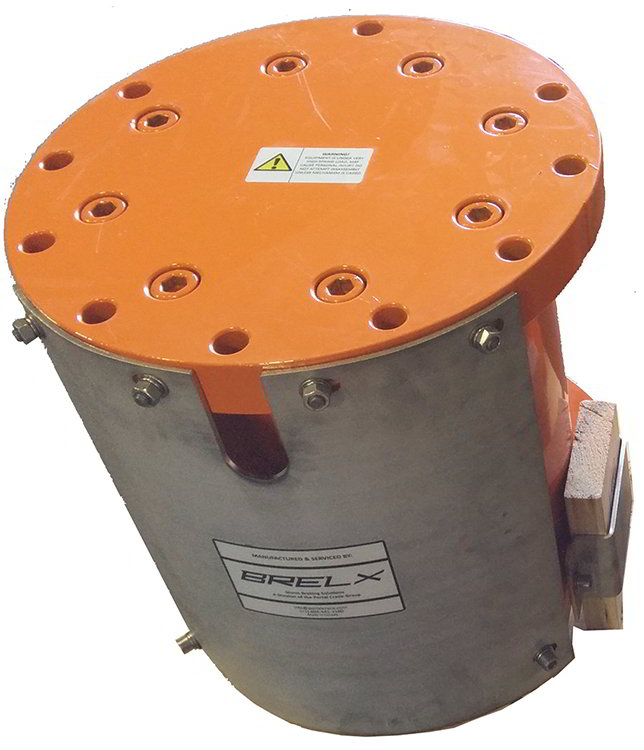
RB Rail Brakes utilize the weight of a crane in the braking process and provide the braking force along the rail.
They are spring set and hydraulically released. Once released, the brake hangs above the rail at a pre-designed clearance.
Actual braking capacity depends on the applied force and applicable coefficient of friction (different for static and dynamic braking).
Static models available:
- SRB-130-C capacity 130 kN
- SRB-220-C capacity 220 kN
- SRB-300-C capacity 300 kN
Dynamic models available:
- DRB-90 capacity 90 kN
- DRB-180 capacity 180 kN
Automated With Crane Jacking Capability
- DRB-90-J braking capacity 96 kN; Jacking capacity 950 kN
Applications for Rail Brake
- Ship to Shore Cranes. - Rail Mounted Gantry Cranes.
- Automated Stacking Cranes. - Log Handling Cranes
- Wide Span Cranes. - Ship Loaders
Gallery
Hydraulic Power Units - Special
BRELX Hydraulic Power Units for Special Applications
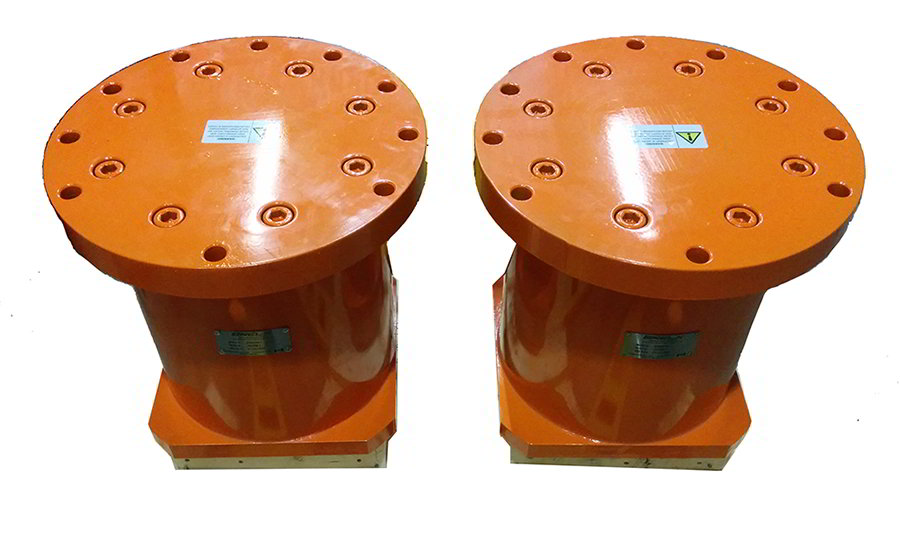
With many years of experience in the field, our team of engineers is capable of designing customized power units to operate BRELX or other manufacturers’ equipment and meet and exceed customers’ expectations.
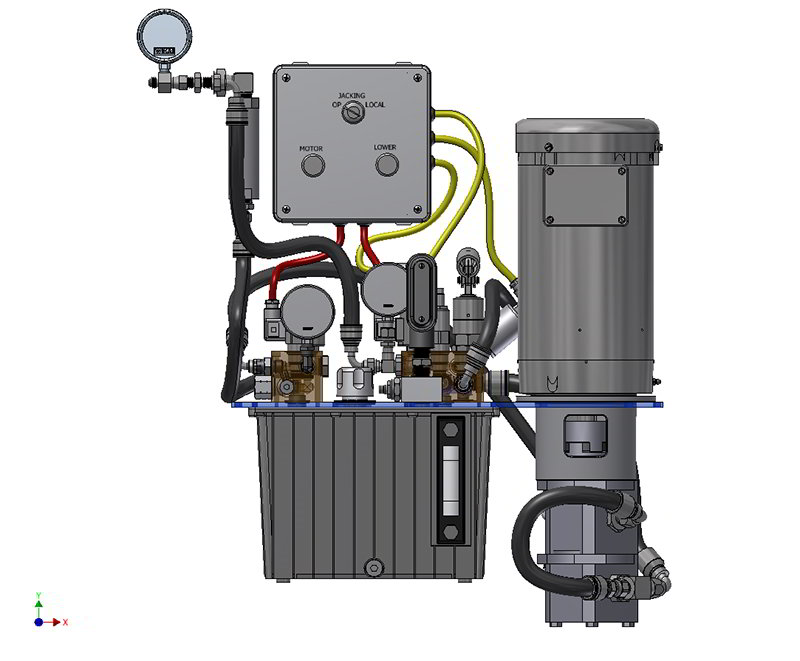
Power Unit with Automatic and Local Control
HPU-DRBHJ specially designed to operate DRBH-J model of Dynamic Rail Brakes with capability to jack one corner of the crane for a wheel replacement. Each Rail Brake has its own Power Unit for customized operation.
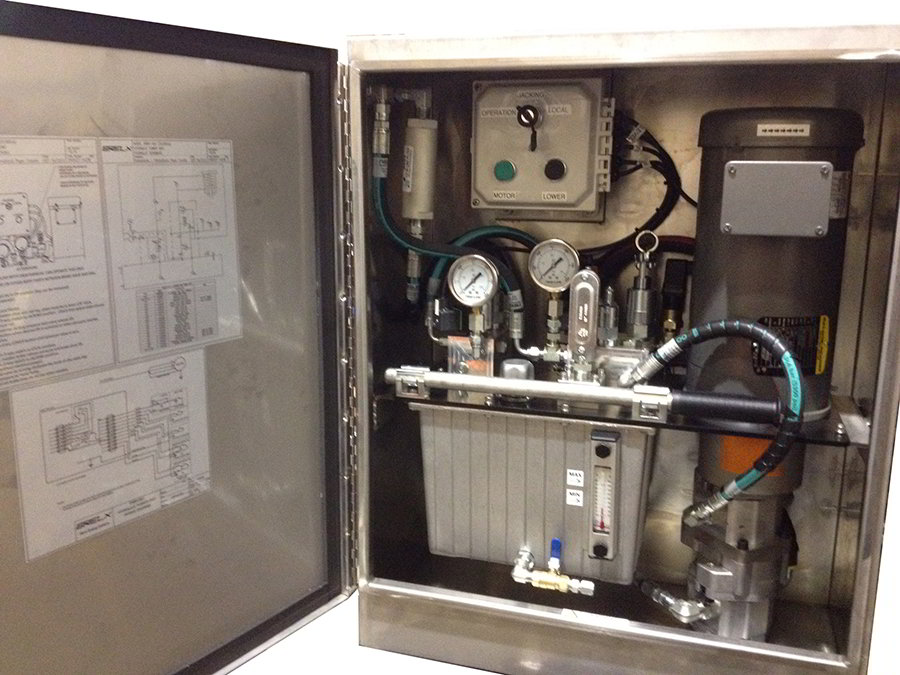
The storm brake system is designed to give the operator automatic control of all brakes from the operators cab (push button box supplied) and also local control at each brake. Each power unit has two solenoids for releasing and jacking respectively as well as individual hydraulic pumps for each function. In each power unit, there are Local jacking controls to raise and lower controls for each brake as well as a set and release button in the operators cab to control all brakes at once. The HPU pumps are hardwired with pressure, level and temperature switches to prevent the motor from running too long or in the event of a fault condition. The operator has indication in the operator cab when each brake has been released or set.
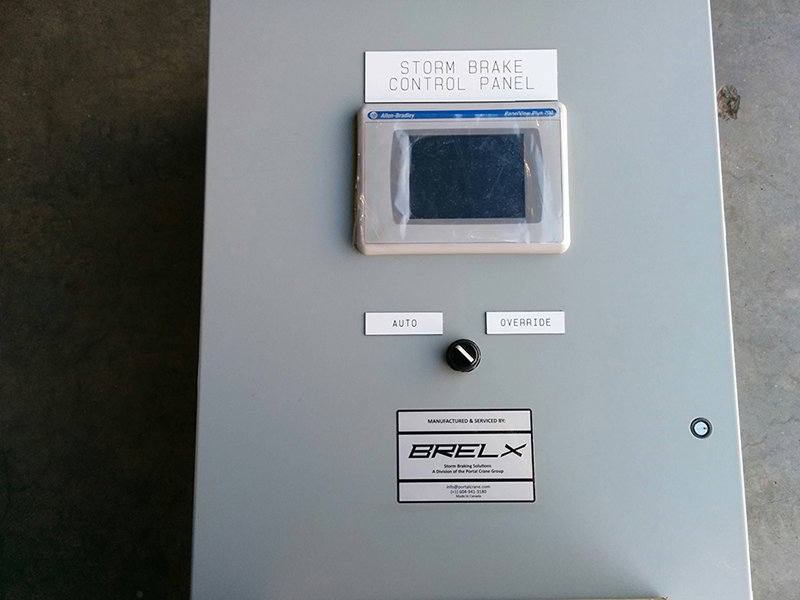
Each brake can be placed into three different modes, Operator, Jack or Local. These modes can be selected using the brake’s selector switch located in the junction box on the power unit. In addition, there is another selector switch located in the PLC panel for auto or override modes.
An override selector switch located in the PLC cabinet is for maintenance or troubleshooting (override mode) which will bypass the GPS signal. The Auto mode will set the brakes when outside limits or after no motion for a period of time.
HPU for very aggressive environment
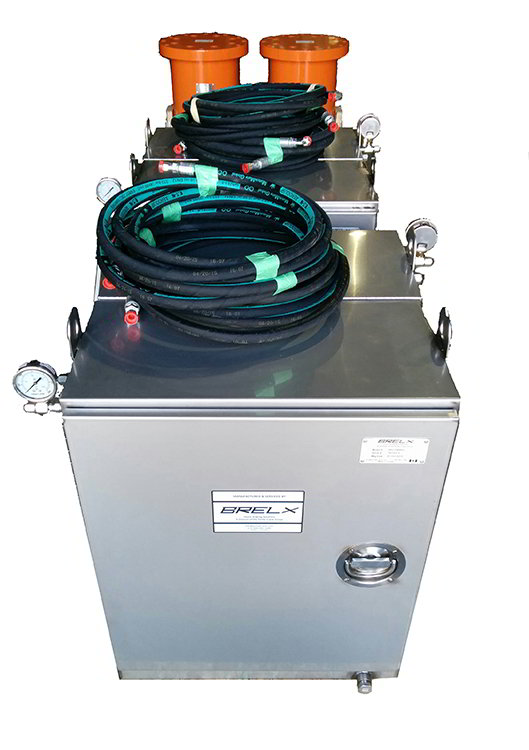
Power unit designed to operate in potash handling facility where the air is saturated with sulphur particles which contaminate hydraulic oil during the braking process. Fluid contamination can lead to high maintenance costs and downtime in hydraulic systems. BRELX engineers have designed special power unit with reservoir isolator to provide protection against the ingestion of airborne contaminants such as dust, chemicals, and water vapor – into your hydraulic system though the reservoirs breather vent. Power unit was contained in a Nema 4x sealed Stainless steel enclosure for additional corrosion protection.
Hydraulic Power unit WB-RB -HPU to release wheel brake – rail brake system
Special design Power Unit to operate Wheel Brake and Rail Brakes mounted on a Ship-To-Shore crane. In addition to the quality CSA / UL approved components, power unit is equipped with large accumulator for fast rail brakes and wheel brakes release time.
Gallery
Hydraulic Power Units - Internal & External
BRELX Hydraulic Power Units for:
Internal mounting
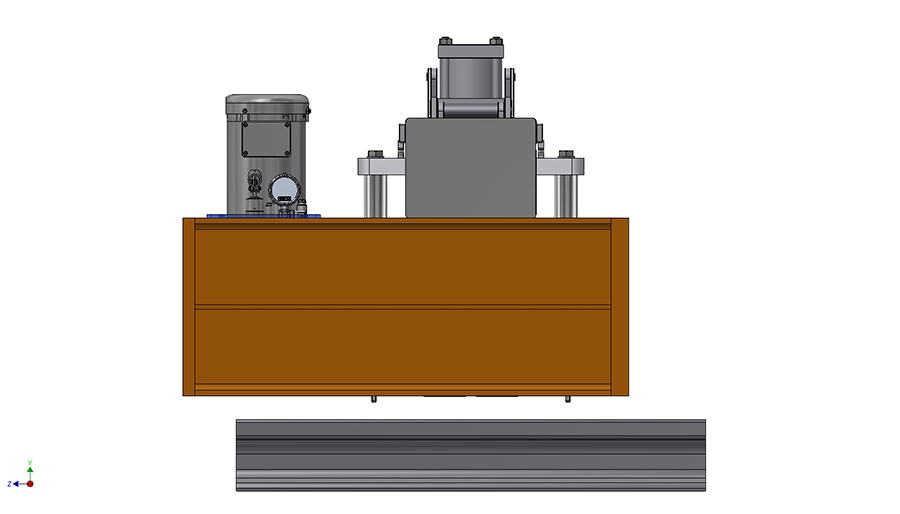
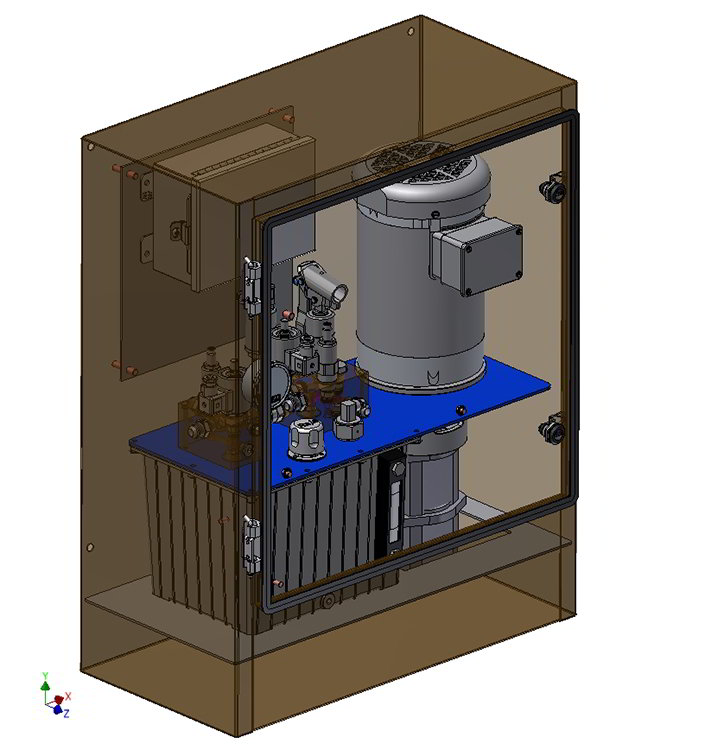
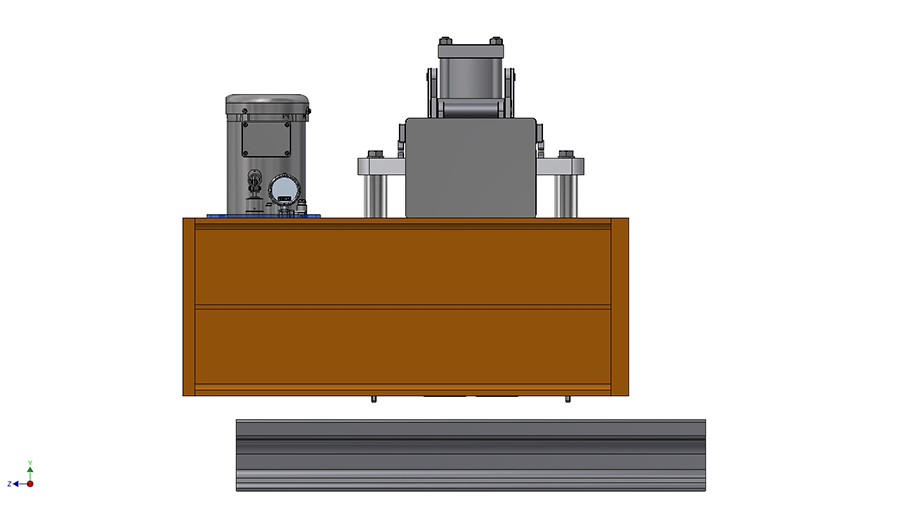
Compact power unit is designed to operate spring set Rail Clamps. It is installed along with a mechanism within the same brake base. This hydraulic system does not require continuous pump operation. All valves and/or solenoid coils are easily accessible or replaced without disassembly of other mechanical or electrical hydraulic power unit components. Power Unit is supplied with a flow control valve in order to provide adjustable Rail Clamp set time.
Normally open solenoid valve with manual override function and Din connector with LED indication are standard. Pre-wired stainless steel junction box is oversized for ease of maintenance. A hand pump is supplied for manual release operation.
External mounting
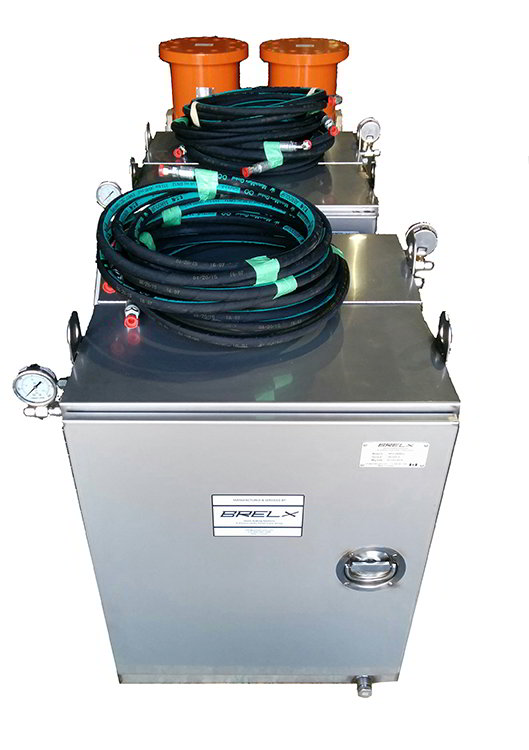
Power unit designed to release one or more Rail Brakes, Wheel Brakes or Rail Clamps. All components are fully contained in a robust Stainless Steel enclosure with a hinged door and quality door locks. It is mounted remotely to the equipment it operates.
Each External Power Unit is supplied with Oil Catch Basin with manual valve drain. Internal components are selected with the same high quality standards as apply for the Internal Power Unit.
Gallery

Wheel Brakes
WHEEL BRAKES - ELECTRIC & HYDRAULIC


WB Wheel Brakes apply force generated by springs on the both sides of crane wheels. Oversized brake shoes with bonded friction material apply on the side flanges of idler wheels, providing the friction forces, and thus, braking capacity.
WHEEL BRAKES WHB SERIES
Wheel brakes are used as a supplement to the motor gantry brakes and are mounted on the idler wheels of a container crane. By applying a friction force on the wheel flange, they minimize the amount of strain and stress otherwise placed on sill beams and truck assemblies of the crane. A minimum braking torque is applied to hold the crane against the wind burst in conjunction with the existing gantry motor brakes. Wheel brakes must be carefully sized in order to prevent the skidding of the crane caused by too much torque applied on the side of the wheel.
Hydraulic Wheel Brakes:
• Spring Set – Hydraulic Release.
• Flow control valve installed on the brake for the controlled setting time 3 to 30 seconds.
• Self-lubricating bushings and stainless steel pins on all pivot points.
• Proximity switch for release indication signal.
Electric Wheel Brakes:
• Spring Set – patented fully Electric Release.
• No hydraulic components, so no environmental or fire liabilities.
• High efficiency actuator for spring applied braking devices utilize an electro-mechanical release and hold system.
• Actuator holding brake in sealed enclosure and with low power consumption, keeps wheel brake pads released until power is cut-off or lost.
APPLICATIONS
- Ship to Shore Cranes. - Rail Mounted Gantry Cranes.
- Automated Stacking Cranes. - Log Handling Cranes.
- Wide Span Cranes. - Ship Loaders
Technical Data:
View Technical Data Sheet (PDF) (Electric), View Technical Data Sheet (PDF) (Hydraulic)
Brochures:
View Brochure (PDF) (Electric), View Brochure (PDF) (Hydraulic)
Gallery

Rail Brakes


OUR BRELX RAIL BRAKES
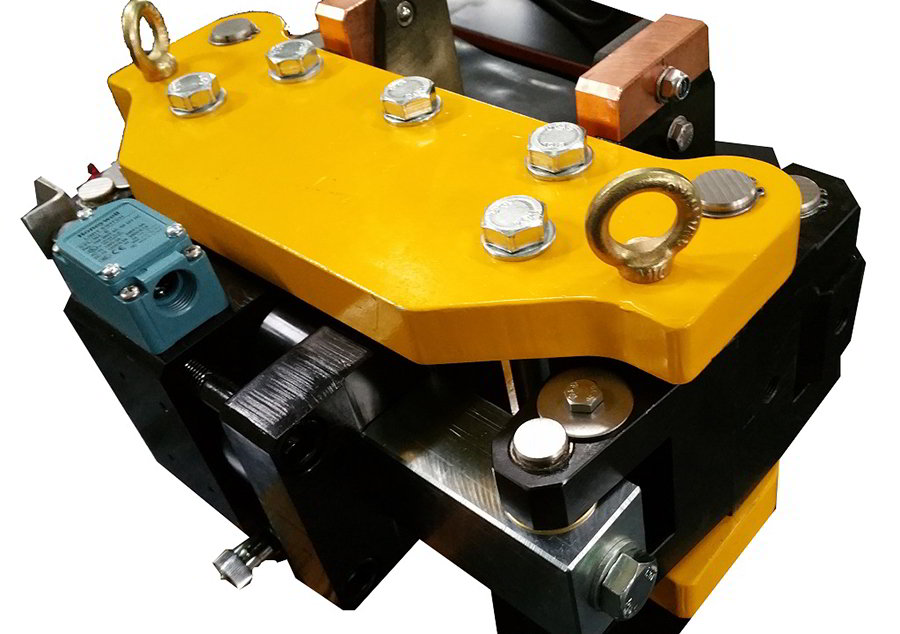
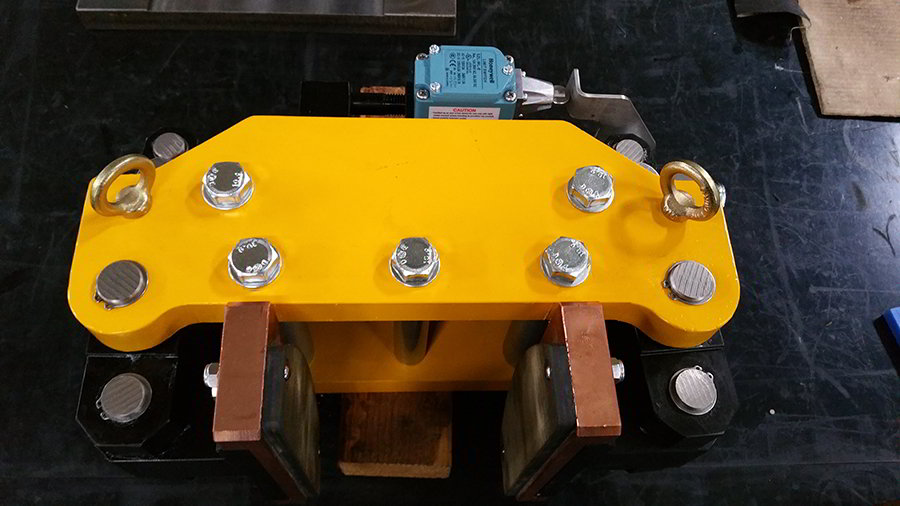
Rail Brakes are Storm Brakes which provide braking force along the top of the rail. They are spring applied devices which force a hardened steel serrated shoe or friction material lined brake shoe against the rail. In turn, some of the of the crane weight is reduced on machine wheels. This can be an important factor when considering overall machine brake capacity. Actual braking force depends on the applied force and applicable coefficient of friction (different for static and dynamic braking).
Rail Brakes are spring set and HYDRAULICALLY OR ELECTRICALLY released. Once released, it hangs above the rail at predesigned clearance. Brake mounting clearance and the existing rail vertical deviation affects achievable braking force and the life span of the springs within the brake.
Traditional practices in brake design dictate that shoe to rail clearance is limited and brake shoe travel is restricted in order to prolong the life of the springs.
New concept BRELX design and spring selection allows for unrestricted spring movement for greater rail height fluctuation, still ensuring long spring life. Self Adjusting Rail Brakes have a constant braking force over the ±19 mm allowable rail deviation.
Check out both our rail brakes today.
Need Help? Our Support team is here
Our in-house support team is also always available to provide you with the technical expertise you require to keep your equipment up and running. Problem, question or concern…we’re here to help!